
Joule effect applied to the heating of rubber
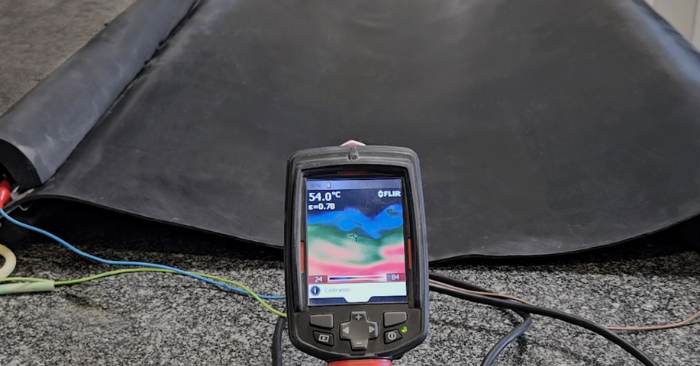
The Joule effect is a physical phenomenon that consists of the generation of heat when an electric current passes through a conductive material. This increase in temperature occurs due to the resistance the material offers to the flow of electrons, converting part of the electrical energy into thermal energy.
Traditionally, the Joule effect has been mainly associated with metals and conductive alloys used in electrical resistors, heaters, and industrial heating systems. However, advances in composite materials have opened up new possibilities, allowing traditionally insulating materials, such as rubber, to take advantage of this phenomenon thanks to the incorporation of advanced conductive additives.
Currently, the development of graphene-based additives applicable to materials such as rubber is driving a new generation of heating solutions with applications across diverse sectors, including automotive, construction, the energy industry, and industrial equipment manufacturing.
How the Joule effect works in rubber
To understand the heating of rubber through the Joule effect, it is important to remember that conventional rubber is an electrically insulating material. This means that, on its own, it does not allow the passage of electric current and therefore cannot generate heat through this mechanism.
The situation changes when conductive materials are incorporated into the elastomer matrix. Among them, graphene stands out due to its exceptional electrical, thermal, and mechanical properties. When properly dispersed within the rubber, it forms a conductive network capable of carrying electric current.
When current flows through this internal network of conductive particles, a controlled electrical resistance is created. As a result, heat is generated uniformly throughout the material thanks to the Joule effect.
This process makes it possible to directly convert electrical energy into heat within the rubber component itself, eliminating the need for external resistors or additional heating systems.
Advantages of heating rubber using this effect
The application of the Joule effect to rubber offers numerous advantages compared to conventional heating systems, including:
- Uniform heating:
One of the main benefits is the homogeneous distribution of heat. Since it is generated within the material itself, hot spots and temperature differences that typically occur with external heating systems are reduced.
- Greater energy efficiency:
The direct generation of heat inside the component minimizes energy losses. This results in lower electricity consumption and higher overall system efficiency.
- Compact design:
Heatable parts integrate the heating function directly into the component itself, eliminating wires, resistors, and auxiliary elements. This simplifies the design and reduces the overall weight of the assembly.
- Fast response:
Graphene-based conductive materials can reach the desired temperature in a very short time.
- Mechanical flexibility:
Unlike many metallic heating systems, rubber maintains its flexibility and ability to deform even while generating heat, which is particularly useful in a wide range of applications.
The role of graphene in the Joule effect applied to rubber
Graphene has become one of the most promising materials for developing heatable rubbers. It is a structure made up of a single layer of carbon atoms arranged in a hexagonal lattice.
When incorporated into rubber at appropriate concentrations, it makes it possible to create highly efficient conductive networks without significantly compromising the mechanical properties of the elastomer. As a result, it is possible to manufacture flexible components capable of heating through electric current in a safe, uniform, and controlled manner.
Key industrial applications
The use of the Joule effect in elastomeric materials is creating new opportunities across numerous industrial sectors. For example, one of the most interesting applications is the prevention of ice and frost formation, where seals, gaskets, flexible pipes, and heatable rubber coatings can maintain temperatures above the freezing point, preventing blockages and damage in installations exposed to extreme weather conditions.
Another notable area is underfloor heating systems, which enable a lighter and more versatile design compared to traditional ones. These systems can be installed in industrial, commercial, or even residential environments, providing a uniform heat distribution with high energy efficiency.
In addition, the automotive industry is exploring potential applications to improve comfort and energy efficiency. These include heatable seals, anti-fog systems, battery components, and elements for protection against low temperatures. In electric vehicles, where energy management is crucial, these solutions can help reduce the consumption associated with conventional climate control systems.
In summary, the advantages in terms of energy efficiency, functional integration, flexibility, and design are driving the development of new applications in automotive, construction, industry, and smart infrastructure. As the technology continues to evolve, these materials are emerging as a viable solution to meet future heating needs, combining performance, sustainability, and innovation in a single material.