
Controlling static electricity: ESD solutions for the polymer industry

Electrostatic dissipation is becoming increasingly important in the polymer, plastics, rubber, and coatings industries. Although resins and plastic materials are naturally insulating materials, many industrial applications require a certain level of conductivity to control static electricity.
The accumulation of electrostatic charges can cause anything from the attraction of dust and dirt to electrical discharges, sparks, damage to electronic components, or malfunctions in certain equipment. For this reason, materials with antistatic and ESD (Electrostatic Discharge) properties are essential in industries where safety, cleanliness, and the protection of sensitive components are key priorities.
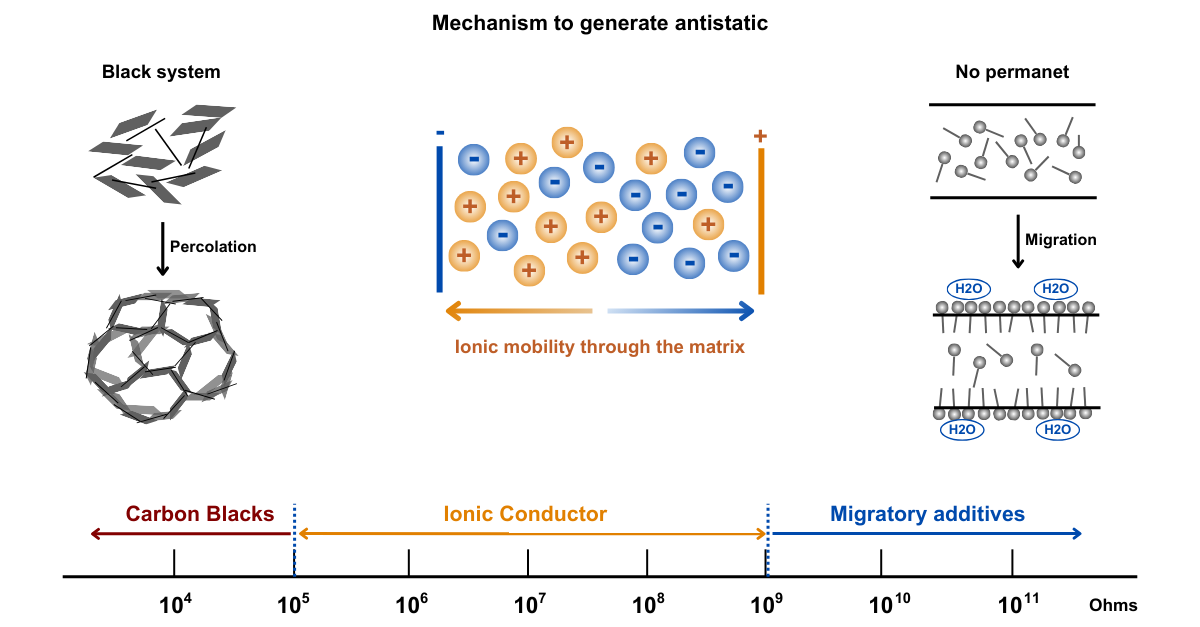
In this context, antistatic and ESD additives make it possible to modify the electrical properties of different host materials, achieving effective and controlled charge dissipation.
What is electrostatic dissipation?
Static electricity occurs when electrical charges build up on the surface of a material. In highly insulating materials, such as many polymers and plastics, these charges can remain for long periods of time.
When the accumulated charge finds a suitable path to discharge, an electrostatic discharge (ESD) can occur. In certain applications, these discharges can be harmful, particularly when sensitive electronic components are present or in environments where a spark could pose a risk.
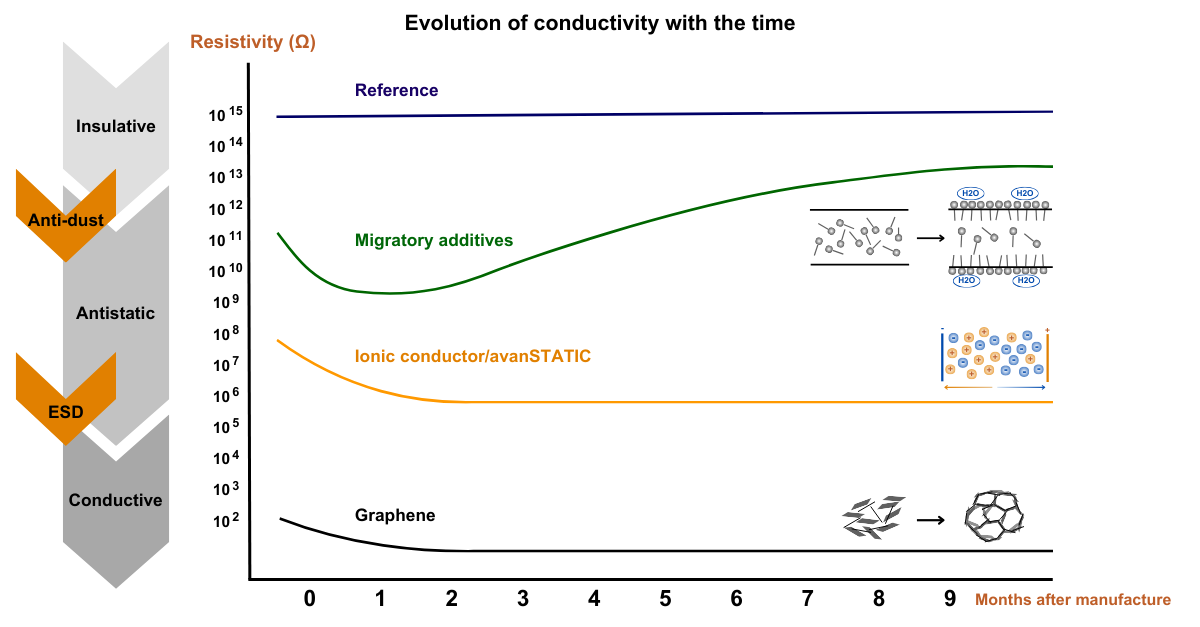
Antistatic additives give the material a certain ability to dissipate static electricity in a controlled manner. This helps reduce charge accumulation and minimize the associated problems. Common applications include:
- Safety footwear.
- Industrial flooring.
- Rollers and swivel wheels.
- Conveyor belts.
- Handrails.
- Gloves.
- Electronic components.
- Plastic parts and components.
- Industrial paints and coatings.
Key characteristics of antistatic and ESD additives
Solutions designed for electrostatic dissipation must be tailored to the specific characteristics of the polymer and the end application. Some of the most important performance features include:
- Static dissipation and permanent ESD performance: they help control the accumulation of electrical charge throughout the material’s service life, depending on the formulation and system used.
- Non-migratory effect: certain technologies provide antistatic performance without relying on continuous migration of the additive to the surface.
- Low dosage: achieving the required electrical performance with a small amount of additive can simplify formulation and help preserve the material’s original properties.
- Colorless and colorable: certain solutions allow the desired aesthetic appearance to be maintained or color to be incorporated according to the requirements of the final product.
- Food-grade: for applications where the material must meet specific requirements for food contact, solutions formulated for these needs can be used, always subject to the applicable regulations and approvals.
Antistatic additives for rubber
Rubber is an extremely versatile material used across a wide range of industries and can be formulated in many different ways. For this reason, selecting the right antistatic additive requires taking several variables into account.
These include the type of rubber, the formulation, the polarity of the compound, and the electrical properties that need to be achieved.
The amount of additive required can also vary considerably from one formulation to another. Therefore, the selection process should take into account not only the required electrical performance but also the mechanical, physical, and processing properties that the final product needs to maintain.
Antistatic additives for EVA
EVA (ethylene-vinyl acetate) is widely used in the manufacture of sheets, foams, and microexpanded compounds. It is also used in applications such as orthopedic insoles, sheets, construction boards, and injection-molded parts.
Its low weight, ease of processing, and combination of properties have contributed to its widespread use in numerous industrial applications. However, EVA itself has extremely low electrical conductivity. When the benefits of EVA foam need to be combined with increased electrical conductivity, specific modification technologies are required.
To meet this need, solutions such as avanNATUR have been developed to provide conductive and antistatic properties in EVA formulations, according to the characteristics and requirements of each application.
Antistatic additives for TPU and PU
Polyurethane (PU) is another material widely used in industry. Its versatility means it can be found in both rigid applications and foam systems. In these types of formulations, factors such as the final material density and the type of polyol can significantly influence the antistatic performance of the system.
In addition, there is a wide variety of TPU and PU materials on the market, each with different characteristics and formulation requirements. Therefore, antistatic solutions should be selected based on the specific polymer and the performance requirements of the application.
Antistatic additives for TPU and PU can help reduce issues such as unwanted adhesion of dust and dirt, electrostatic discharges that can affect sensitive electronic components, and particle build-up on the surface. In addition to improving certain functional properties, controlling electrostatic charge can help maintain a better visual appearance of the final product, particularly in applications where surface cleanliness is important.
Antistatic additives for latex
The use of latex gloves and other technical gloves has expanded well beyond the healthcare sector. The growth of electronics manufacturing, cleanrooms, and other controlled environments has created new requirements related to the electrical properties of these products. In certain applications, gloves may need to have antistatic properties to prevent charge build-up and reduce certain risks associated with electrostatic discharge.
To meet these requirements, various additives are available that can provide antistatic properties to latex formulations, depending on the end use. Product selection should take into account factors such as whether the glove is single-use or reusable, as well as the type of rubber used, such as NBR, SBR, or other formulations.
Antistatic additives for plastics
The wide variety of thermoplastics available, together with the constant development of new grades and materials, makes it necessary to develop solutions tailored to each formulation. Antistatic additives for plastics can be used in a range of industrial applications to help reduce dust build-up, control electrostatic discharges, and minimize certain risks associated with spark generation in sensitive environments.
The choice of additive depends, among other factors, on the type of polymer and the required duration of the antistatic effect.
In addition, the availability of colorable solutions is particularly valuable when electrical properties need to be combined with aesthetic requirements or visual product identification.
Antistatic additives for paints and coatings
Electrostatic dissipation also plays an important role in the field of paints and industrial coatings. Antistatic additives specifically formulated for these systems can reduce the surface resistivity of paints and coatings. As a result, they can help minimize dust attraction and control the accumulation of electrical charges.
These solutions are particularly relevant in industries such as automotive and electronics, where surface properties, cleanliness, and electrostatic discharge control can be important factors. In addition, the right choice of additive can help maintain the coating’s performance throughout its service life, depending on the formulation, operating conditions, and specific requirements of each application.
The importance of choosing the right additive
There is no single antistatic solution that is suitable for all polymers and applications. The final electrical performance depends on multiple factors, including the type of material, formulation, additive concentration, processing conditions, and end-use requirements. Therefore, the development of an electrostatic dissipation solution should start with the specific needs of the final product.
Combining expertise in materials, formulation know-how, and electrical characterization makes it possible to select suitable technologies for plastics, rubber, EVA, TPU, PU, latex, paints, and coatings.
Ultimately, antistatic and ESD additives are a key tool for transforming traditionally insulating materials into solutions capable of effectively and reliably controlling and dissipating static electricity. This helps meet the growing demands of industrial sectors where safety, electronic component protection, surface cleanliness, and material performance are essential.