
Odor-control additives for a more sustainable industry
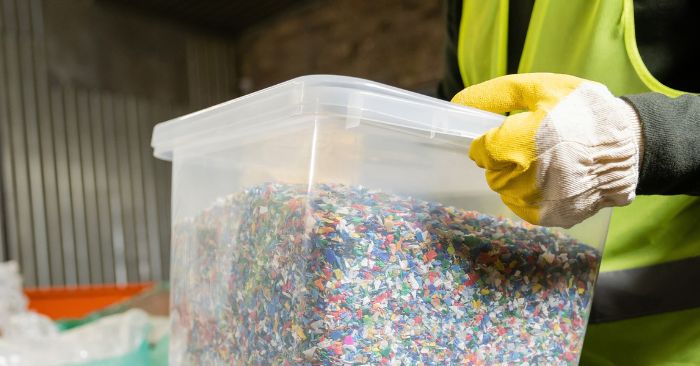
In an industrial context that is increasingly focused on the circular economy and sustainability, the incorporation of recycled materials in the manufacturing of plastic and elastomeric products is now a well-established trend. However, it also introduces new technical challenges. One of the most significant is the presence of unwanted odors in the final materials, an issue that can limit product acceptance and its use in high value-added applications.
In this scenario, odor-control additives have become an essential technological solution. A notable example in this field is the avanNATUR ODORLESS range, specifically designed to neutralize odors in polymeric materials, particularly those based on recyclates. These materials not only improve the organoleptic quality of products but also enable higher levels of recycled content in formulations, directly contributing to the sustainability of the sector.
The odor challenge in recycled materials
Recycled polymers may contain traces of volatile compounds generated during their service life or as a result of thermal and oxidative degradation processes. Substances such as aldehydes, ketones, organic acids, or sulfur-containing compounds are responsible for unpleasant odors that negatively affect the perceived quality of the final product.
In addition, during processes such as elastomer vulcanization or the use of peroxides in thermoplastic processing, volatile by-products may also be generated, further increasing the odor load of the material.
The result is a dual challenge: on one hand, the need to maintain mechanical and functional properties; on the other, the requirement to deliver odor-free products, especially in sectors such as automotive, construction, consumer goods, and packaging.
What are odor-control additives?
Odor-control additives are formulations specifically designed to reduce, neutralize, or eliminate the molecules responsible for bad odors in polymeric materials. Unlike masking systems, which simply “cover” the smell with fragrances, these additives act directly on the molecules causing the problem. Their mechanism of action can vary depending on the technology used, but it is generally based on three main principles:
- Molecular adsorption, trapping volatile compounds within their structure.
- Chemical neutralization, reacting with odor-causing molecules to deactivate them.
- Physical capture, retaining compounds within mineral or porous matrices.
This approach enables a real and long-lasting reduction of odor, without altering the properties of the material or relying on perfumes or temporary solutions.
Odor-control technology applied to sustainability
The impact of odor-control additives goes far beyond olfactory comfort. Their contribution to sustainability is direct and measurable at several levels:
1. Increased use of recycled materials.
One of the main benefits is the ability to increase the recycled content in new formulations. Traditionally, odor has been a major barrier to the reuse of post-consumer polymers. Thanks to odor-control additives, these materials can be reintroduced into higher value-added applications, reducing dependence on virgin raw materials.
2. Reduced material waste.
By improving the perceived quality of recyclates, the disposal of entire batches of material is avoided, even when they are functionally suitable but fail to meet sensory market requirements. This leads to greater resource efficiency and less industrial waste generation.
3. Compatibility with the circular economy.
Odor-control additives fit perfectly within circular economy principles, as they help close the lifecycle loop of plastic materials. They enable reuse without compromising final quality, promoting a more sustainable and efficient production model.
4. Reduced indirect environmental impact.
By allowing a higher incorporation of recycled content, the need to produce virgin polymers is reduced, which in turn lowers energy consumption and decreases the emissions associated with petrochemical production.
Industrial applications
Odor-control additives are used across a wide range of industrial sectors:
- Automotive: where interior components must meet high comfort standards.
- Construction: especially in insulation materials and recycled products.
- Footwear and sports: where sensory comfort is a key requirement.
- Sustainable packaging: where contact with food or sensitive products requires the absence of odors.
- Technical plastics and elastomers: particularly those made from recycled materials or complex formulations.
In all these cases, odor reduction helps expand the range of applications for recycled materials, improving their competitiveness compared to conventional solutions.
Advanced technologies for static electricity control
The development of advanced materials has enabled the creation of innovative solutions for static electricity control in polymers. Among the technologies developed by Avanzare, several approaches based on functional additives stand out.
- avanGRP: graphene-based conductivity
This technology uses additives based on graphene and other conductive materials that form a three-dimensional network within the polymer. This network enables controlled electrical conductivity, allowing static charges to dissipate effectively. One of its main advantages is that it maintains stable conductivity even under changes in humidity or temperature, making it a highly robust solution for demanding environments. However, it has limitations regarding the color range of the final product.
- avanDISS: permanent and colorable dissipation
The avanDISS technology is based on intrinsically dissipative polymers that also form a three-dimensional network within the material. Unlike other solutions, it allows the final product to be colored, which broadens its applications in sectors where aesthetics are important. Although its conductivity may be more limited compared to graphene-based solutions, it stands out for its permanent performance and design versatility.
- avanSTATIC / avanION: ionic control
This approach uses ionic conductors integrated into polymers. Its effectiveness depends on the polarity of the base material, making it especially efficient in polymers with some degree of polarity. It is generally a permanent solution, although its performance may vary depending on the application and material type.
- avanSTATIC MLL: solution for low-polarity polymers
For low-polarity polymers, where other solutions may be less effective, avanSTATIC MLL is used. This is a non-permanent antistatic additive whose effect can last between 6 months and 3–4 years, depending on the material and usage conditions. This flexibility makes it a very attractive option for applications where a permanent solution is not required, but effective control is needed throughout the product’s service life.
Innovation and development in functional additives
The current trend in the additives industry is clear: moving from purely functional solutions to multifunctional materials that provide added value. In this context, odor-control additives are part of a broader set of technologies that also include antimicrobial properties, UV stabilization, and improved processability.
In the case of advanced materials developed by Avanzare, these solutions are part of an innovation strategy aimed at solving real industrial challenges while promoting a more efficient and sustainable use of resources.